


Table of Contents
Various Details About Waterproof Watches
2025-07-08
When watches first became popular in the early 20th century, waterproofing was still an unattainable function, and the biggest enemy of watches was water. As people's demand for waterproof watches became stronger and stronger, various watch brands began to study how to improve the waterproof performance of watches. For example, Rolex's Oyster watch became popular overnight because of its excellent waterproof performance; in the 1950s, various watch brands even launched a "diving watch" research and development competition. At that time, it was a great achievement to be able to push the waterproof performance to about 100 meters.
Today, the basic waterproof performance of watches is no longer the same. If you accidentally touch water in your life, it is harmless for most watches. However, no matter how fine the watch is, it will still be invaded by water because of its different component structures. Regarding the waterproof performance of watches, we must first establish some correct concepts. We don't need to over-protect the watch, but we can't overestimate the waterproof ability of our watch, so that the watch can be worn for a long time.
Today, we will share with you all the knowledge about waterproof watches, so that watch lovers can clarify some issues and "treat" their favorite watches well.
Most watches usually have "WATER RESIST" and other related words on the bottom of the watch, which means that this is a watch with waterproof function. On the contrary, if there is no special mark, it is better to treat it as a non-waterproof watch. In addition to non-waterproof watches, general waterproof functions can be roughly divided into: primary life waterproof, advanced enhanced waterproof, and professional diving watch waterproof level.
Usually we will find four waterproof units marked on the bottom of the watch, such as: Bar (pressure), ATM (atmospheric pressure), M (meter), FT (foot) and other units.
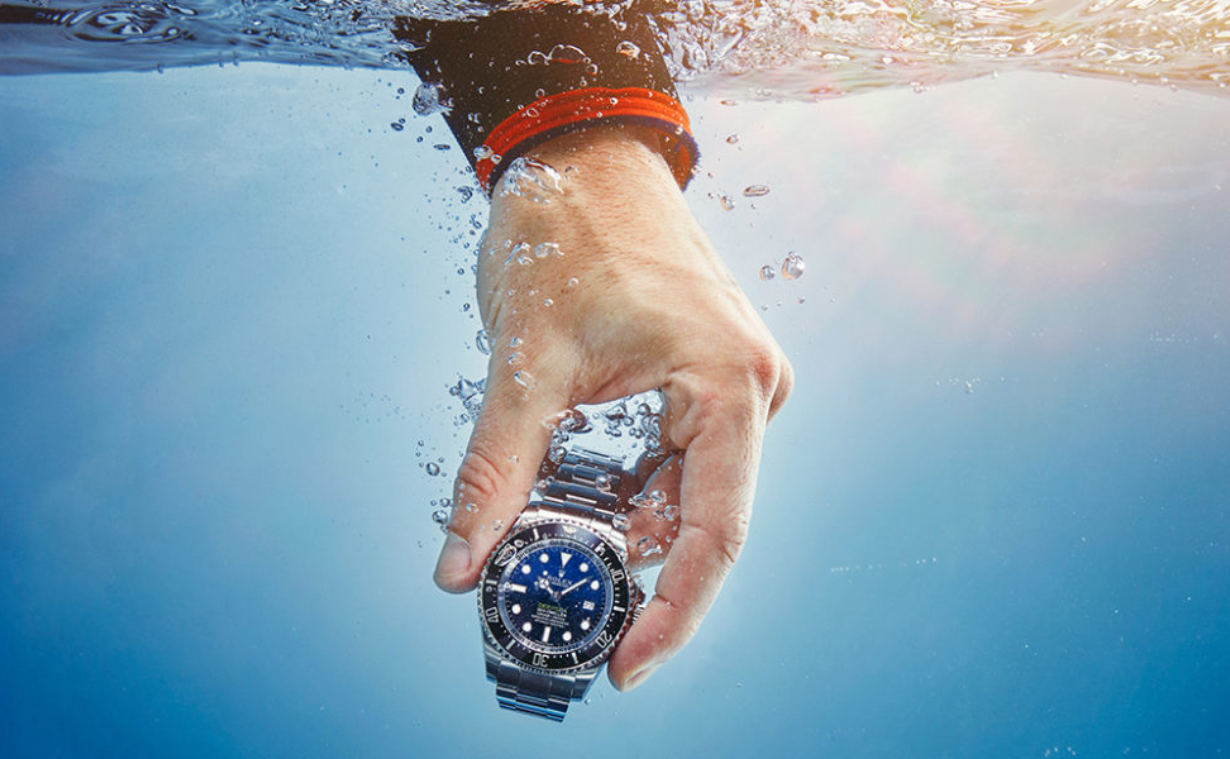
Types of waterproof watches
Non-waterproof watches: usually refers to watches with a waterproof capacity of less than 30 meters, such as many classic Patek Philippe models are 30 meters or even not (the old 5002P has no waterproof performance). It is not recommended to expose this type of watch to water. If the surface is dripped or stained with water, it needs to be wiped dry as soon as possible. If the wearer sweats a lot when wearing it, you may as well take the watch off and wipe it dry first. Sometimes some watches of brands are not waterproof, not because of poor quality or because they cannot make waterproof watches; it is a consideration of the material of the watch. For example, the classic Patek Philippe models are all made of top-grade crocodile leather, or some decorations or craftsmanship requirements on the watch, so the waterproof design is abandoned.
Waterproof for daily life: If the watch is advertised as 50-100 meters waterproof, it can probably be classified as waterproof for daily life. This type of waterproof watch is not afraid of contact with sweat, splashing water droplets when washing hands, raindrops and other water sources. Splashing water droplets will not cause much damage to it, but if the watch is soaked in water such as bathing, swimming, etc., it will not be very good.
Enhanced waterproof: Watches with a waterproof rating of 100 to 200 meters can be classified as enhanced waterproof. Watches of this level do not need to be afraid of water. They can handle bathing, swimming, and even surfing. However, this is the limit. Do not regard it as a professional watch that can be used for diving tasks, because this kind of watch still has risks in waterproof design. If you really need to engage in diving tasks, you still have to rely on the following waterproof watches.
Diving watch waterproof: At present, watches marked with a 300-meter waterproof function can be regarded as the threshold of diving watches. More professional ones can reach 600 meters or even break 1,000 meters. This type of watch meets our characteristics of "diving watches". Because in addition to its tight structure, the pressure resistance of the case itself is enough to withstand the high pressure underwater, so it is safe to wear this type of waterproof watch to dive.
As we have mentioned above, a 200-meter waterproof watch is a diving watch for playing with water, such as swimming and snorkeling occasionally. 300 meters is a professional entry-level diving watch, which can handle general 10-meter experience diving and 20-meter deep diving. Of course, the waterproof ability of watches with a waterproof rating of 600 meters or even more than 1,000 meters is of no use to ordinary people. It is just a concept of excellent waterproof ability of a sports watch. Be careful when waterproof watches below 100 meters come into contact with water. In addition, for any waterproof watch, you must estimate the condition of the watch yourself before going into the water. For example, if the watch is in extremely poor condition, has not been maintained for many years, or has been opened unprofessionally, you must go to a professional watch repair agency to test the waterproof ability of the watch.
Watch Water Resistance Rating
3 bar / 30 meters / 3 ATM / 100 feet
Withstands water splashes (e.g., washing hands, rain).
Not suitable for swimming or submersion.
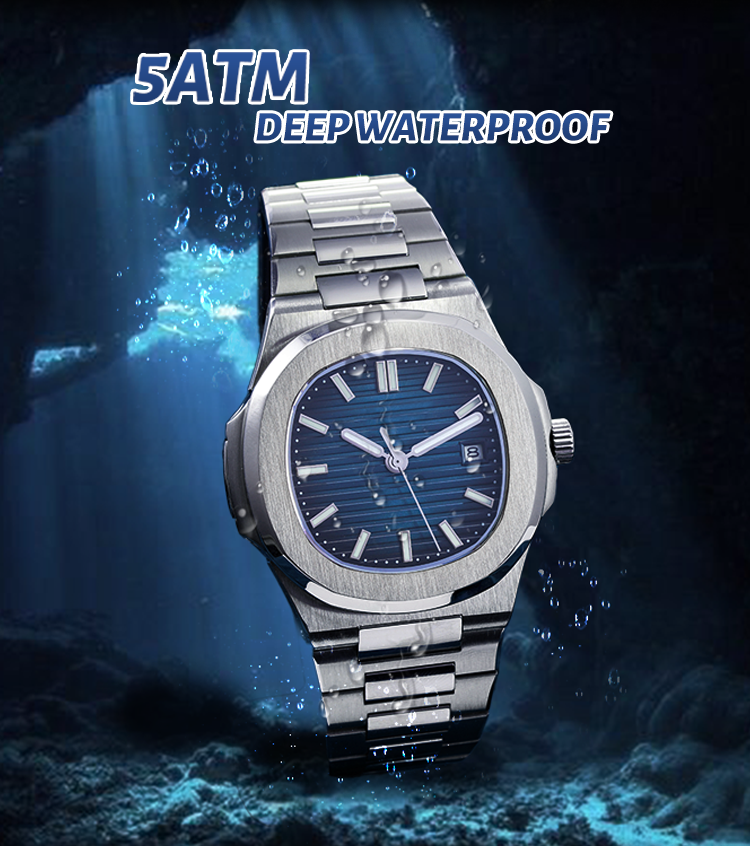
5 bar / 50 meters / 5 ATM / 165 feet
Can handle splashes and light swimming.
Swimming is possible, but should generally be avoided.
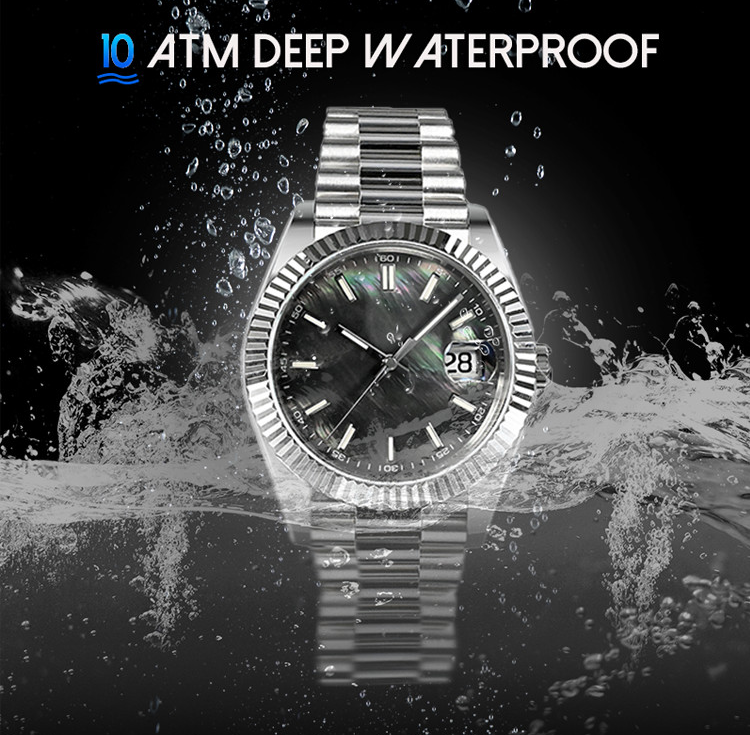
10 bar / 100 meters / 10 ATM / 330 feet
Suitable for snorkeling, scuba diving, and other water sports.
Safe for a variety of water activities.
20 bar / 200 meters / 20 ATM / 660 feet
Suitable for safe diving.
Should not be used for helium diving unless equipped with a helium escape valve.
This is probably more than most users will need unless they are serious divers.
30 bar / 300 m / 30 ATM / 1,000 ft
Typically a professional dive watch.
For deep sea diving where helium is required.
60 bar / 600 m / 60 ATM / 2,000 ft
For professional and technical diving.
Designed to withstand very deep underwater environments and enormous water pressures.
Ideal for serious divers who need high reliability in extreme conditions.
Generally, when diving a hundred meters deep in the sea, we humans will rely on some diving machines, such as submarines and submersibles. Because the artificial oxygen helium content is very high, no matter how the watch is sealed, it cannot prevent the helium atoms in the oxygen from entering the watch. If you stay in the diving chamber full of oxygen for a long time, the internal pressure of the watch will be too high and it will explode, so helium must be discharged. (Ordinary people cannot be exposed to that kind of environment, and the valve is not needed for diving, so for most people, that function is just a symbol.)
For professional diving watches, helium discharge valves are generally set on the watch. The common ones we see are roughly divided into two schools: automatic helium exhaust valves and manual helium exhaust valves. In fact, the structures of both are very simple. The helium exhaust valves used now are generally automatic. However, in order to create a tough design and recognition of diving watches, some brands also use manual helium exhaust valves. If you can't tell the difference, let's list two representative brands, such as Rolex's Sea-Dweller and Omega's Seamaster 300.
Waterproof Watch Precautions
Even if we wear a waterproof watch, we still can't be too careless. The water resistance of a watch is determined by three key elements, namely the case structure, the mirror fit, and the integrity of the rubber ring. When the watch is assembled in the factory, all three elements determine its water resistance - but remember that over time, the performance of the watch will gradually decrease after being worn and worn. In addition, the water resistance test of the watch is carried out during the production process, not when it is sold in the store, which may be months or even years away from the factory. There are also small cracks on the glass mirror after the customer wears it for a long time (most people think that small cracks on the mirror will not affect the wearability, but they don’t know that this seriously endangers the waterproofness of the watch), oxidation of the waterproof rubber ring of the crown/bottom of the watch, etc. As for any type of diving watch, we must also be careful not to step on "mines" when wearing it, including:
● Avoid directly flushing the watch with water sources such as high-pressure water guns, which may break the waterproof structure of the waterproof watch.
● Although some waterproof watches have a screw-in crown design, generally speaking, if there is moisture on the outside of the watch, it is recommended not to operate the button or crown, just in case.
● Some chemical detergents such as shampoo, shower gel, cosmetics, etc., if they are in contact with the watch for a long time, may accelerate the aging and deformation of the waterproof rubber ring of the watch, so try to avoid these detergents from contacting the watch.
● The high temperature and composition of the hot spring may cause the metal of the watch case to discolor and corrode, and at the same time accelerate the aging and deformation of the waterproof rubber ring, so you must never wear a watch to take a hot bath.
● The waterproof rubber ring of a watch is a consumable. Usually, it will gradually become tired and brittle after about two years of wearing, thus reducing the waterproof effect. Therefore, remember to check the waterproof performance of the watch after wearing it for a period of time, and do some necessary maintenance and replace the rubber ring.
Conclusion
The waterproofness of a watch is not permanent. Waterproofness depends on several factors, some of which are affected by the way it is worn or the time. Gaskets can be corroded or deformed, the case will have problems, and even the watch glass will loosen or crack. This is why we emphasize why watches need to be maintained every few years.
ReviewsNumber of comments: {{ page.total }}
I want to comment?
{{item.nickname ? (item.nickname.slice(0, 2) + '*****') : item.source === 1 ? 'mall buyer' : '--'}}
{{item.comment_time}}
Review in the {{item.country}}
Reviews
Merchant
{{replyItem.nickname ? (replyItem.nickname.slice(0, 2) + '*****') : replyItem.source === 1 ? 'mall buyer' : '--'}}
{{replyItem.parent_nickname ? (replyItem.parent_nickname.slice(0, 2) + '*****') : '--'}}
{{replyItem.is_merchant_reply === 1 ? replyItem.reply_time : replyItem.comment_time}}
Review in the {{replyItem.country}}
Reviews

No customer reviews
ReviewsNumber of comments: {{ page.total }}
I want to comment?
{{item.nickname ? (item.nickname.slice(0, 2) + '*****') : item.source === 1 ? 'mall buyer' : '--'}}
{{item.comment_time}}
Review in the {{item.country}}
Reviews
Merchant
{{replyItem.nickname ? (replyItem.nickname.slice(0, 2) + '*****') : replyItem.source === 1 ? 'mall buyer' : '--'}}
{{replyItem.parent_nickname ? (replyItem.parent_nickname.slice(0, 2) + '*****') : '--'}}
{{replyItem.is_merchant_reply === 1 ? replyItem.reply_time : replyItem.comment_time}}
Review in the {{replyItem.country}}
Reviews
No customer reviews
Recommended for You
Get in touch with us
Resources